A One-Stop Shop for AD/ADRD Researchers
The NACC Data Front Door (DFD) provides seamless access to all NACC data, empowering the global research community to rapidly search, visualize, and access ADRC participant data across modalities and repositories to accelerate the pace of discovery in AD/ADRD.
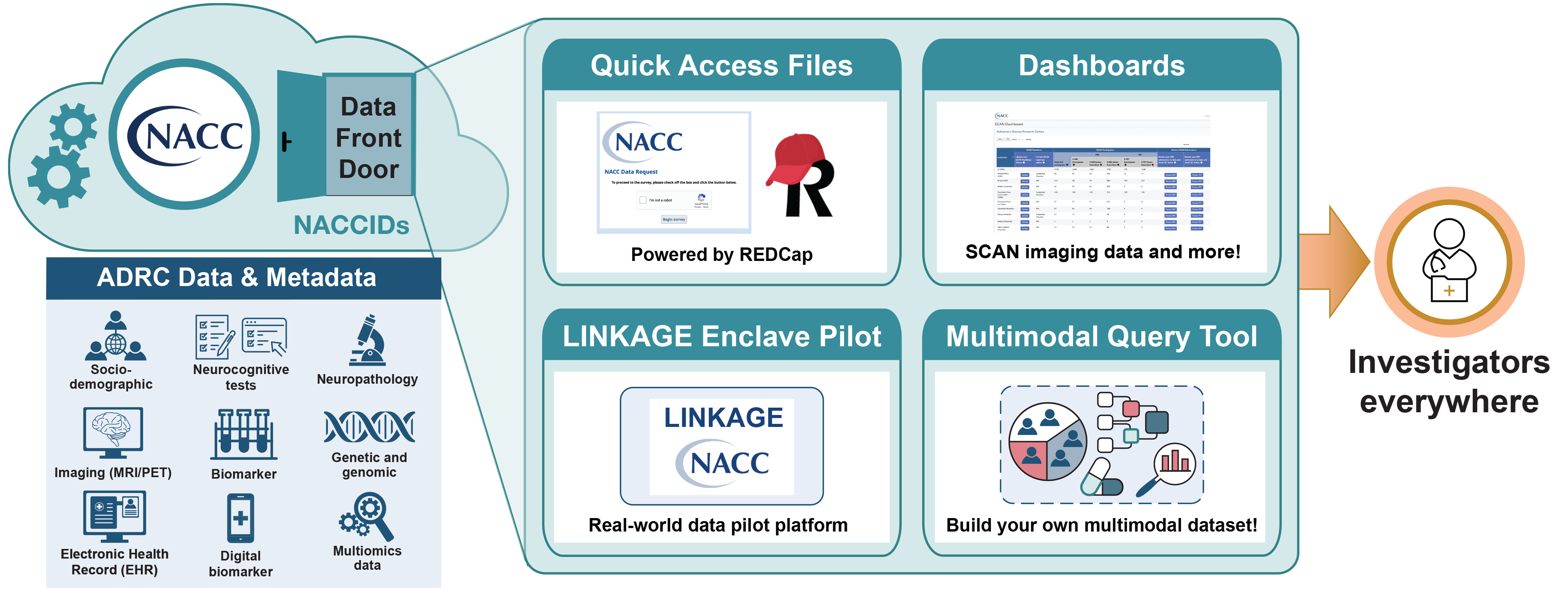
The DFD offers streamlined, freely available access to a growing volume and variety of standardized and harmonized multimodal data from over 54,000 participants. Associated metadata and analysis metadata for all ADRC participants are searchable, visualizable, and accessible through the DFD.
Key components of the DFD:
- Quick Access File Data Request System (powered by REDCap)
- Real-time dashboards
- Secure LINKAGE Enclave
- Multimodal Query Tool (MQT)
The DFD also includes expanded interoperability with partner repositories and initiatives, including SCAN/LONI, NCRAD, NIAGADS, Alzheimer’s Disease Knowledge Portal (ADKP), Brain Digital Slide Archive (BDSA), and CLARiTI.
Available via the DFD
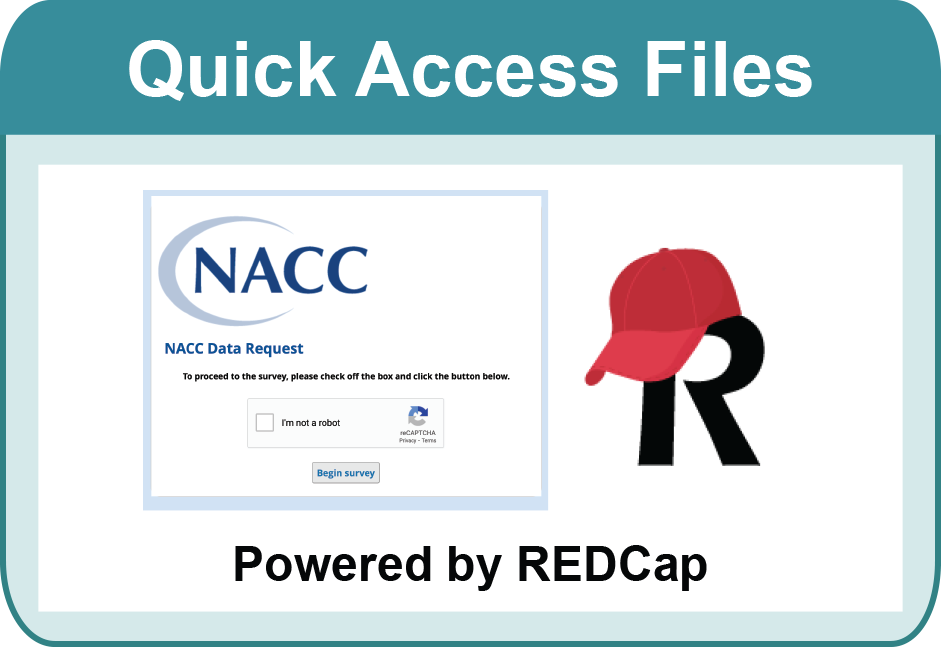
Quick Access File Data Request System (QAF-DRS)
Rapid access to NACC’s high-quality data. Submit a data request to receive a Quick Access File containing UDS standardized longitudinal data, plus the option to add several other disease-specific modules, imaging data, and biomarker data sets. Data include rich multi-domain neurocognitive clinical and phenotypic data. It takes just 15 minutes to sign a DUA and submit a request through our electronic system. Approved researchers will receive all data within 48 hours (not including weekends and holidays).
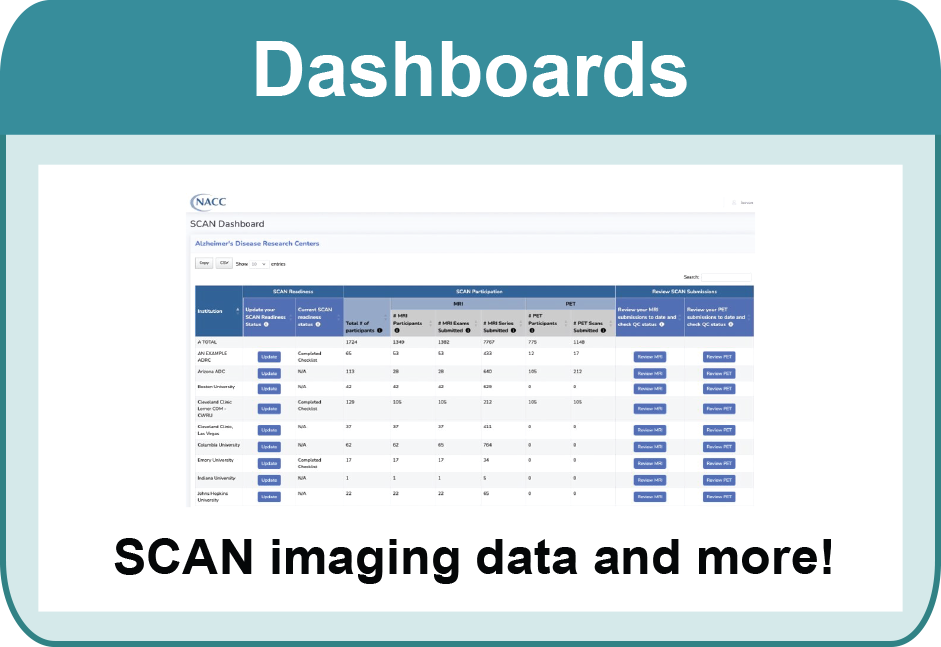
Real-time dashboards
Dynamic insights into data availability. The SCAN Public Dashboard provides researchers with up-to-date information on the volume of standardized MRI/PET data (SCAN-compliant) and analysis results that are available from across the ADRC Program.
NACC LINKAGE Enclave
NACC launched a LINKAGE Enclave that houses integrated and analysis-ready real-world (EHR/claims), UDS, Genetic, and COVID-19 data for consented ADRC participants across three sites. The new NACC LINKAGE enclave integrates rich multimodal data with cutting-edge analytical tools, equipping researchers with unprecedented capabilities to address some of the most pressing challenges in AD/ADRD research. By linking real-world data (EHR/claims) with NACC’s gold-standard diagnoses and comprehensive multidomain neurocognitive data, we are providing researchers will a powerful new tool to uncover novel insights into AD/ADRD disease risk, progression, and outcomes. The LINKAGE Enclave provides a secure environment to collect and integrate UDS, COVID form, EHR, CMS/Medicare and genetic data, enabling researchers to analyze aging and health outcomes comprehensively. It will be instrumental for performing analyses on sensitive real-world data (RWD) together with other NACC data modalities and genetic data from NIAGADS.
Approved researchers at pilot project partner sites can now access and perform analysis on integrated UDS, real-world data (EHR and claims), and genetic data (Genome-Wide Association Studies (GWAS), Whole Exome Sequencing (WES), Whole Genome Sequencing (WHS)) within a secure enclave.
Multimodal Query Tool (MQT)
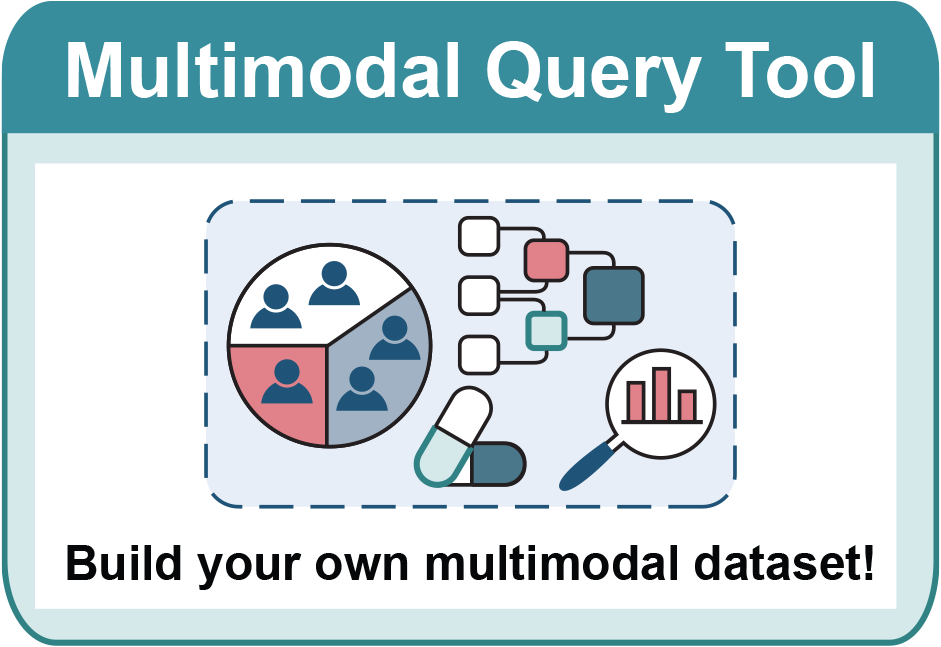
The Multimodal Query Tool is a self-service tool designed to empower researchers to:
- Quickly assess data fit for a research question or proposed analysis by building and visualizing custom multimodal datasets in real time.
- Easily search and access a large volume and variety of multimodal data on ADRC participants across major AD/ADRD repositories (e.g., NACC, NCRAD, NIAGADS, ADKP, LONI, and others).
- Monitor sample size and key characteristics of eligible participants as you refine your query criteria.
- Download NACCIDs for your selected participants and use them to access additional data across NACC and partner repositories.
- Generate a reproducible query record to cite in publications and support transparent, FAIR-aligned research.