The National Alzheimer’s Coordinating Center (NACC) functions as the centralized data repository, and collaboration and communication hub for the National Institute of Aging’s (NIA’s) Alzheimer’s Disease Research Centers (ADRC) Program, which currently includes 35 centers across the United States.
NACC is home to one of the largest, oldest, and most powerful Alzheimer’s datasets, built in collaboration with more than 42 Alzheimer’s Disease Research Centers (ADRCs) throughout the US over the past 20+ years.
Next data freeze: June 2025
Most recent data freeze: March 2025


We are on a mission to modernize data collection, integration, and sharing to advance Alzheimer’s research.
All NACC data is freely available to researchers.
About UDS Data

54,000+
participants with data at NACC
(20,000+ active participants)

201,000
Clinical assessments
1-20 per participant (median=3)

8,300+
Neuropathology Exams
from 58% of deceased participants

15,000+
MRI & PET Participants
1-14 exams per participant

1,450+
Published studies
using NACC data

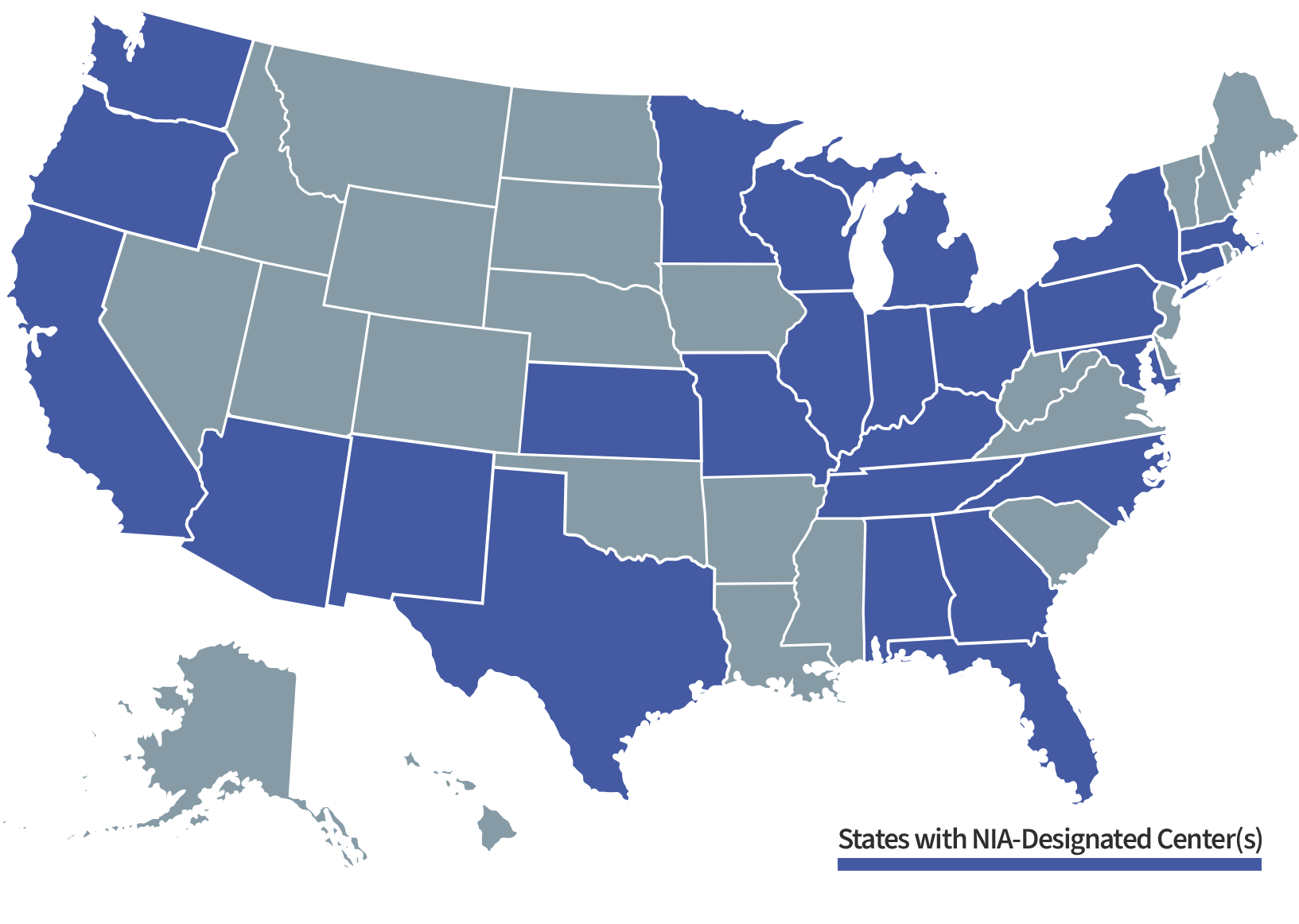
36
Alzheimer's Disease Research Centers
contributing data across 25 states
NACC collects data from 36 active ADRCs across 24 states

ADRC Portal: Your Center’s Gateway to NACC Data Tools
The ADRC Portals provide secure, center-specific tools to manage participant data and streamline UDSv4 submissions. Designed for secure, flexible, and easy-to-use access to multimodal data pipelines

Explore NACC Data and Research Tools
The NACC Data Front Door offers streamlined access to one of the world’s largest longitudinal AD/ADRD datasets. Researchers can search, visualize, and request curated multimodal data—linking clinical, imaging, genetic, and biomarker information across the ADRC network.

Upcoming Events and Webinars
Stay informed and connected through upcoming NACC-hosted webinars, workshops, and ADRC community events. Learn about new tools, hear implementation updates, and engage directly with experts across the AD/ADRD research network.
Join the fight against Alzheimer’s
Discover how you can make a difference and support Alzheimer’s research.